All
Where Private 5G Doesn't Work (and What to Do Instead)
Private 5G is powerful, but not universal. Learn when to use Wi-Fi, LMR, satellite, or hybrid architectures instead.
Read article →Oil & gas
11 min read · March 2024
The hidden cost center in modern plants — and the fastest path to measurable savings
Clover IQ
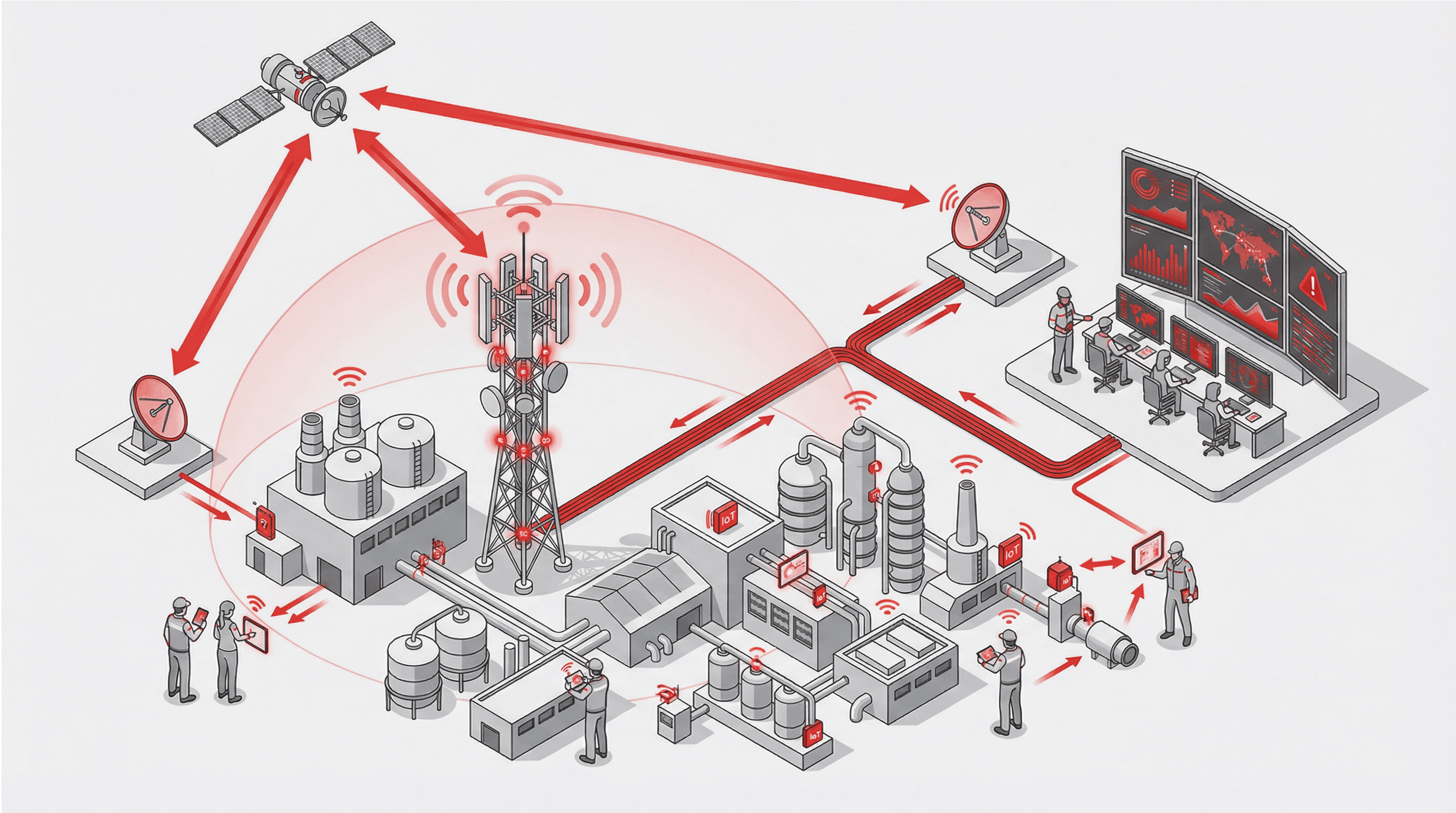
Walk through any refinery, chemical plant, or terminal and you'll see the same paradox: teams operate world-class process equipment, but the rugged mobile devices that power day-to-day execution are often treated like disposable tools.
These devices aren't cheap. Intrinsically safe phones and tablets, rugged scanners, and specialized accessories routinely cost $3,000–$5,000 per unit, before you add spare batteries, chargers, mounts, and SIM plans. Yet in many plants, device management still looks like a "drawer system": devices tossed into a cabinet, borrowed by whoever needs one, and returned when someone remembers.
That gap — between the value of the device and the way it's controlled — creates a quiet cost center that drains capital, increases cyber and compliance exposure, and undermines frontline productivity. The good news is this: it's fixable, and the savings are real, repeatable, and fast to prove.
In an office, a lost phone is irritating. In a refinery or chemical plant, the consequences are amplified:
So when rugged devices are unmanaged, the "cost" isn't just hardware loss. It's process friction + security drift + audit exposure + downtime risk.
Many plants lose 4–5 devices a year, translating to $15K–$20K in direct losses per plant. The fix is industrial-grade controls: secured storage cabinets, charging stations mapped to device IDs, digital check-in/check-out via QR/NFC, and ownership tracking.
One device gets used by employees, contractors, OEM techs, and temporary turnaround staff — but the access profile rarely changes. Plants need role-based access controls, MDM/Intune enforcement, and time-bound contractor profiles.
A worker enables hotspot "just to get something done." Suddenly unauthorized individuals connect and traffic bypasses enterprise controls.
Physical SIMs get moved into personal phones or contractor devices. SIM-to-device binding (IMEI lock), automatic deactivation policies, and managed eSIM solve this blind spot.
Without structured lifecycle management, patching is inconsistent, firmware gets outdated, broken devices accumulate.
Clover IQ delivers a plant-ready device governance blueprint, physical control + digital chain-of-custody, role-based access and endpoint policy enforcement, hotspot and SIM governance tied to the network strategy, and a lifecycle management framework — without disrupting shift operations.
Related articles
All
Private 5G is powerful, but not universal. Learn when to use Wi-Fi, LMR, satellite, or hybrid architectures instead.
Read article →Oil & gas
How MQTT messaging and private LoRa networks combine for cost-effective asset monitoring across upstream and midstream operations.
Read article →Chemical
Deployment considerations for Wi-Fi 7 in petrochemical environments — coverage, coexistence, and hazardous area constraints.
Read article →