Why It Breaks Down
Industrial sites have a connectivity problem that no existing product category was designed to solve cleanly. The problem has five components that appear together at nearly every major industrial operation — and every conventional solution addresses one or two of them while leaving the others unsolved.
The Timeline Problem
Industrial connectivity needs arise on operational timelines — a refinery turnaround planned six weeks out, a construction project breaking ground next month, a utility storm restoration starting the day after the storm passes. Carrier infrastructure, temporary tower deployments, and fixed wireless installations operate on procurement timelines measured in months, not weeks. The gap between when connectivity is needed and when conventional solutions can deliver it is where industrial operations run on personal phones, overloaded radios, and safety systems that don't reach the work zone.
The Environment Problem
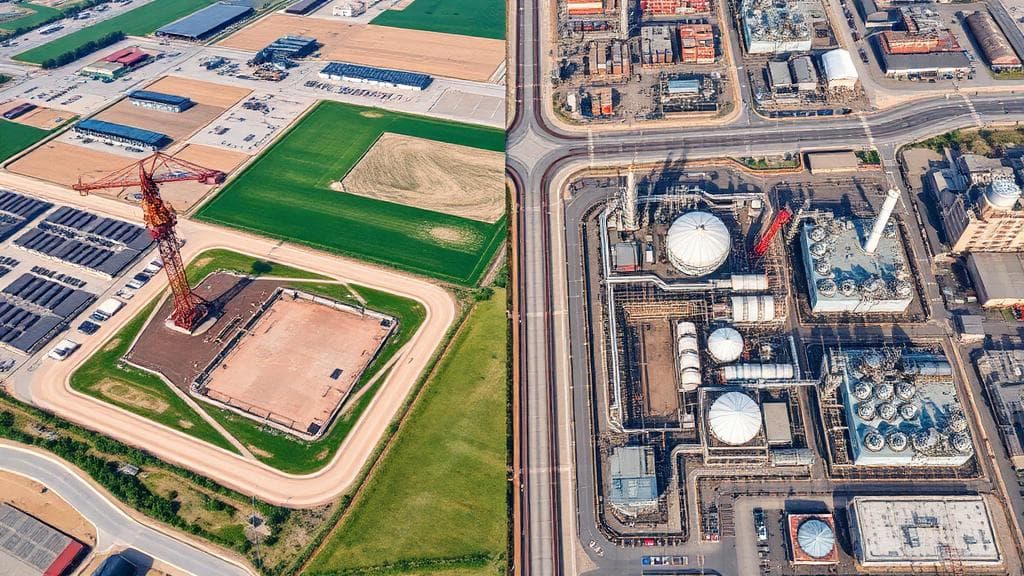
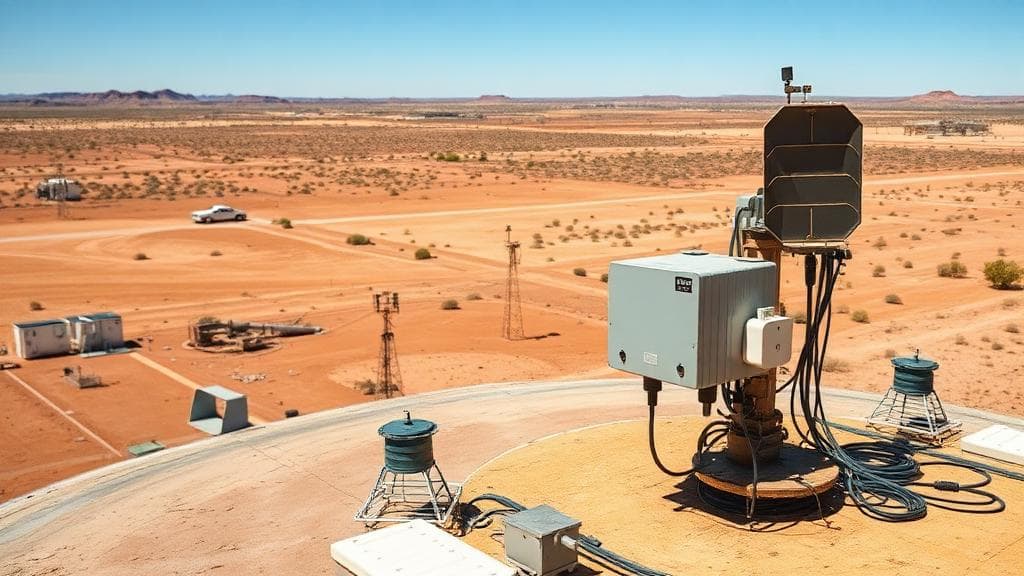
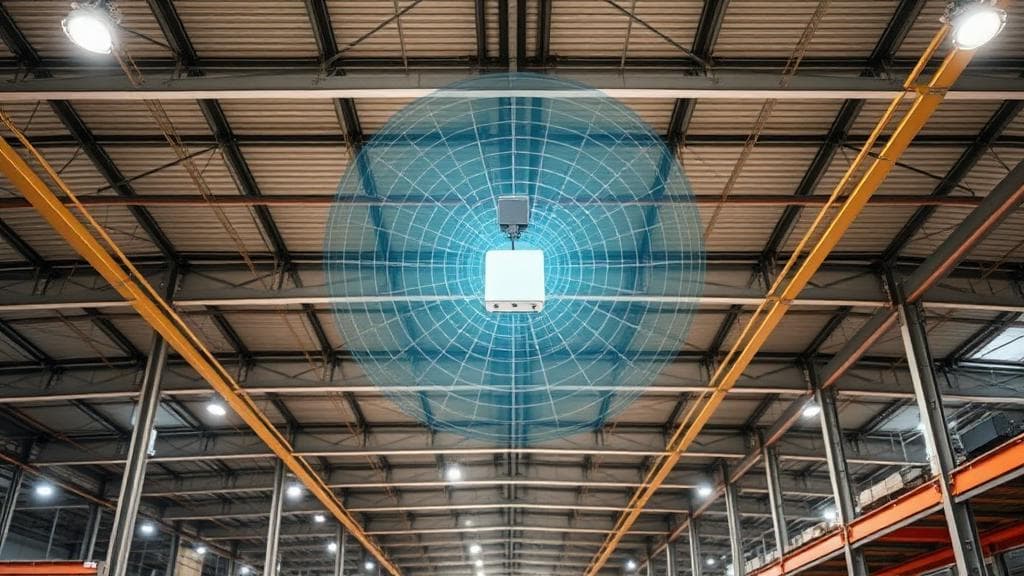
Industrial sites — process units, remote wellpads, construction footprints, mining operations — are hostile RF environments. Metal structures, dense equipment, below-grade areas, and geographic isolation defeat carrier LTE and distributed Wi-Fi in ways that general-purpose connectivity solutions were not designed to handle. The specific challenge of delivering reliable coverage into a pipe rack, a TAR work zone, or a remote Permian Basin wellpad requires antenna positioning and network engineering that general-purpose solutions don't provide.
The Isolation Problem
Industrial operations require network isolation that carrier LTE and public Wi-Fi fundamentally cannot provide. OT/IT segmentation, dedicated bandwidth for safety-critical systems, managed device access, and an audit-ready device inventory are requirements for industrial operations that share a network with hundreds of contractors. None of these requirements can be met on a public carrier network. The connectivity solution has to be operator-controlled, VLAN-segmented, and managed — not shared with everyone within carrier range.
The Temporality Problem
Industrial connectivity needs are temporary by nature. A turnaround lasts three weeks. A construction project runs 18 months and then demobilizes. A storm restoration spans five days. Permanent infrastructure installations — the capital investment that takes two years to approve, 18 months to build, and 15 years to depreciate — do not fit an operational need that arises, peaks, and ends on a project timeline. The economics of permanent installation for a temporary need are fundamentally mismatched.
The Mobility Problem
Industrial work moves. A storm restoration crew that starts at one staging area and advances through the damaged corridor needs basecamp connectivity that follows them — not a fixed installation that becomes irrelevant when the work moves past it. A construction project that expands from the initial pad to a new phase area needs coverage that repositions in an hour, not a Wi-Fi infrastructure that needs to be physically extended. Static connectivity solutions for mobile work are not connectivity solutions — they are coverage maps that expire.
What Actually Works
The Clover IQ Mobile Connectivity Unit was built to address all five problems simultaneously — in a single platform that deploys in one hour, operates on its own power, and demobilizes when the work is done. It is not a carrier solution, not a Wi-Fi kit, not a generator-plus-router, and not a cell on wheels. Here is what it actually is.
A Self-Contained Private Wireless Platform
The Unit deploys a complete private cellular and Wi-Fi network from a single vehicle. Private 5G on CBRS Band 48 spectrum provides the wide-area coverage layer — sector antenna elevated on the mast, covering the industrial site footprint from a single elevated position, on dedicated spectrum that the operator controls and that no one else can access. Wi-Fi 6E provides the high-density coverage layer for fixed locations — site offices, lay-down areas, production compounds. Satellite backhaul provides the WAN connection that the private network routes through — completely independent of any carrier tower or ground-based infrastructure that may not exist or may not be functioning at the deployment site.
A Mobile Edge AI and Security Platform
The Unit carries GPU compute for real-time edge AI inference running on-site — not in a cloud platform with round-trip latency and connectivity dependency. PTZ cameras, license plate recognition cameras, and AI-based video analytics provide perimeter security, PPE compliance monitoring, vehicle access control, and situational awareness for the mobile control room. All video is retained on the on-prem NVR inside the van — footage never leaves the site perimeter during the engagement.
A Mobile Command and Communications Platform
The three-station mobile control room — operator workstations, monitors, KVM, UPS — gives the operations team an on-site command environment that does not depend on a building or a fixed facility. The on-prem push-to-talk server provides managed, logged, carrier-independent voice communications for safety and operations crews. A tethered aerial platform provides extended elevated coverage for sites where the mast alone does not achieve adequate reach — persistent elevation with radio relay capability, not limited to the flight time of an untethered drone.
An Operated Service — Not a Hardware Drop-Off
The Unit is deployed and operated by a Clover IQ team — not delivered to a site and left for the customer to manage. Pre-deployment configuration is done before arrival. The network is commissioned and tested before the operation begins. A Clover IQ operator is on-site during active shifts for full-command engagements, with 24/7 remote monitoring and a 30-minute response commitment during active deployments. At demob, the equipment is recovered, the network is decommissioned, and a post-deployment report is delivered. The customer gets a functioning, managed connectivity platform — not a hardware problem.
What's On Board
The Mobile Connectivity Unit is built on a purpose-upfitted Sprinter-based van — high-roof, extended wheelbase — with a standing-height interior workspace, three full equipment racks, and a purpose-built power system. Here is what is in it, how it is organized, and what each element does.
Six Things the Van Does
The exterior of the van carries six capability tags that identify the platform's core functions. Each tag corresponds to a hardware and software stack inside:
- Private Wireless: Private 5G on CBRS Band 48, managed by an on-site 5G core server. Dedicated spectrum, VLAN-segmented, SAS-coordinated. Covers the industrial site footprint from the elevated sector antenna on the mast.
- Outdoor Wi-Fi: Wi-Fi 6E access point co-mounted on the mast. High-density coverage for site offices, production compounds, and fixed-location devices. Managed on the same VLAN architecture as the private 5G network.
- Edge AI Workloads: GPU compute servers in Rack 2 and Rack 3. Real-time video inference running on-site for safety detection, perimeter analytics, and custom AI workloads. No cloud dependency in the inference path.
- Video Security & Analytics: PTZ cameras, license plate recognition cameras, and AI-powered video analytics feeding the on-prem NVR. Perimeter intrusion detection, PPE compliance monitoring, vehicle access logging — all retained on-site.
- On-Prem Push-to-Talk: PTT server running locally on the private 5G network. Managed talkgroups, logged calls, carrier-independent voice. Operates without internet connectivity — PTT remains functional even if WAN backhaul is interrupted.
- Mobile Control Room: Three-station operator workspace inside the van — workstations, 27-inch monitors, KVM, UPS. On-site command environment for the operations team, camera feeds, and network management interfaces.
The Three Equipment Racks
Rack 1 — Telecom Core
The network backbone: the private 5G core server managing device authentication and VLAN assignment, the router/firewall managing WAN paths and inter-VLAN access controls, the PoE switch powering the mast-mounted devices, the PTT server, and the fiber backbone connecting to the other racks. This rack is what makes the private 5G network function — it is the operator-controlled carrier in a 12U mobile-rated enclosure.
Rack 2 — Edge AI and Video Analytics
The intelligence layer: GPU-equipped edge AI server for real-time video inference, on-prem NVR for continuous camera recording, and storage for video retention and analytics logs. This rack is what separates the platform from a connectivity-only deployment — the AI analytics capability runs here, on-site, without cloud dependency.
Rack 3 — AI Workloads
The compute extension: a second GPU-equipped server for demanding AI inference workloads, custom model deployment, and any compute-intensive industrial applications the engagement requires. This rack handles workloads that exceed the capacity of Rack 2 and supports future capability expansion without requiring hardware changes to the platform.
The Roof and Mast
Tethered aerial platform
A tethered drone system — the primary elevated platform for radio payloads — provides persistent elevation well above the mast height. The tether provides continuous power (no battery limitation), physical stability in wind conditions that would ground an untethered drone, and a secure communications tether. Radio payloads carried by the aerial platform extend private 5G and Wi-Fi coverage beyond the mast-only footprint for sites where the mast alone is insufficient.
Telescoping mast
The backup elevated platform and primary mounting point for the sector antenna, Wi-Fi 6E access point, PTZ camera, and LPR camera when the tethered aerial platform is not deployed. Approximately 30 feet extended. Used for all standard deployments where aerial elevation is not required. The mast is deployed in minutes; the tethered platform is deployed when the operational coverage requirement exceeds what the mast achieves.
Roof systems
Starlink Flat High Performance satellite terminal (flat panel, not dome) for the primary or secondary WAN backhaul path. 1.6 kW solar array contributing to the onboard power system. Rooftop HVAC for hardware protection in Texas summer operating conditions. PTZ camera for overhead situational awareness at the deployment position.
The Power System
The power system is the element that makes the "self-contained" claim real. The Unit operates independently of grid power: 15 kWh LiFePO4 battery bank for silent runtime and transit power, 5 kW inverter/charger managing AC output and automatic source switching, 1.6 kW solar array for daytime contribution, shore power input for when grid power is available, alternator input for charging during transit, and a diesel generator as an external backup for extended off-grid operations. Automatic transfer switching selects the best available power source without operator intervention. A grid power interruption does not take the network down — the transfer switch handles it in milliseconds.
Three Ways to Scope It
Three engagement tiers scale the deployed capability to the operational requirement:
- Tier 01 — Network: Private 5G + outdoor Wi-Fi + satellite backhaul. Core connectivity for the site — worker data, CMMS access, SCADA backhaul. For operations that have their own PTT and security infrastructure.
- Tier 02 — Network + Devices/Comms: Adds the on-prem PTT server provisioned to the operation's crew structure, and leased intrinsically safe devices pre-provisioned to the network and PTT talkgroups. For operations that need managed communications integrated with the private network.
- Tier 03 — Full Command: Full Tier 02 plus edge AI video analytics, PTZ and LPR cameras, on-prem NVR, the three-station mobile control room, and a Clover IQ operator on-site during active shifts. For operations that need the complete platform — connectivity, safety monitoring, and on-site command capability in one deployment.
What It's Worth
The ROI of the Mobile Connectivity Unit aggregates across the specific value drivers of each vertical it serves. The headline economic argument is consistent across all of them: a deployable operating expense that is available when the operational need exists, versus a capital program that takes years to approve and delivers permanent infrastructure for a temporary need. Here is the framework.
One Hour vs. Weeks
The single most consistent ROI argument across every vertical is timeline. The Unit deploys in one hour. A carrier temporary tower takes 4–12 weeks. A permanent Wi-Fi installation takes weeks of planning, procurement, and installation. For every day that a large industrial operation runs without adequate connectivity — permit tablets that don't work in the field, PTT that fails in the process unit, safety wearables that go offline in the work zone — there is a measurable operational cost. One hour from arrival to live network is the operational guarantee that makes the deployment timeline argument concrete.
Operating Expense vs. Capital Program
Every Clover IQ engagement is billed as an operating expense — a daily rate, a monthly subscription, or an annual retainer, depending on the vertical and the engagement duration. There is no capital commitment, no depreciation, no maintenance overhead, and no end-of-life disposal problem. For operations in regulated environments where capital programs require multi-year approval cycles, the operating expense model converts a capital decision that takes two years into a work order that takes two weeks.
ROI by Vertical
The specific ROI calculations vary by use case — each vertical blog in the Clover IQ content library covers the ROI framework for that specific application:
- Turnaround connectivity: Permit cycle time reduction, contractor productivity, averted schedule slippage. See turnaround connectivity.
- Construction site: Carrier wait eliminated, IoT from day one, theft prevention, monthly vs. capex. See construction site connectivity.
- Events: Vendor revenue protection, SLA compliance, broadcast contract risk. See event operations.
- Emergency response: Guaranteed availability vs. shared queue, retainer vs. activation cost. See emergency response.
- Utilities: Restoration timeline, per-outage-hour cost, equipment theft prevention. See utilities connectivity.
- Remote O&G and mining: Worker safety, SCADA uptime, NPT reduction. See remote site connectivity.
- Airports: FBO revenue protection, contractual SLA vs. best-effort restoration. See airport backup connectivity.
- Broadcasting: Satellite truck cost comparison, SLA exposure, lead time advantage. See live production backhaul.
Questions from the Field
What makes this different from a cell on wheels (COW)?
A cell on wheels extends the carrier's LTE network — it operates on the carrier's licensed spectrum, is managed by the carrier, and provides shared carrier connectivity to everyone within range, including people who have nothing to do with your operation. The Clover IQ Unit deploys a private 5G network on CBRS Band 48 spectrum — dedicated, operator-controlled, VLAN-segmented, and accessible only to provisioned devices. A COW also requires weeks of carrier coordination to deploy; the Unit deploys in one hour. And the COW is only a network — it does not carry edge AI compute, PTT servers, camera systems, a mobile control room, or a self-contained power system.
Can the Unit serve multiple verticals in the same deployment?
Yes. The platform does not specialize per deployment — the full capability stack is present regardless of which vertical the engagement is scoped for. A single deployment at a large industrial event could simultaneously provide the operations network for event staff (events vertical), the safety monitoring for the venue perimeter (edge AI security), PTT for the security team (on-prem PTT), and broadcast uplink for live coverage (production backhaul). The VLAN architecture separates traffic appropriately; the capability stack serves all of these simultaneously from one platform.
What does "operated" mean in practice — what does the Clover IQ team actually do on-site?
For Tier 03 engagements, a Clover IQ operator is on-site during active shifts — not sitting in a van reading, but actively monitoring the network, responding to device issues, adjusting camera positions as the operational footprint changes, managing PTT talkgroup additions when new contractor crews arrive mid-TAR, and serving as the single point of contact for the operations team when anything connectivity-related needs attention. 24/7 remote monitoring covers the off-hours; any alert that requires on-site response gets dispatched on the 30-minute response commitment. "Operated" means a named person with a phone number who owns the connectivity outcome for the duration of the engagement.
How is the engagement priced?
Engagements are priced per the specific vertical and commitment structure — turnarounds at a fixed price per event, construction sites on a monthly subscription with a three-month minimum, events at a daily rate, airport and emergency response on an annual contract, remote operations per-engagement or monthly. There is no public pricing on the Clover IQ site — every engagement starts with a discovery call that scopes the requirement and produces a fixed-price proposal within five business days of a paid site survey. Specific pricing is discussed on the discovery call, not published.
What is the geographic coverage for Texas deployments?
The Unit is Texas-based and covers the full state on the standard engagement terms. The 8-hour on-site arrival commitment for emergency and backup retainer engagements is grounded in Texas geography — Gulf Coast, Central Texas, and the major industrial corridors are well within that window from the unit's home base. West Texas and Panhandle deployments for remote O&G operations are within range for planned operational deployments with standard lead time. For engagements outside Texas, contact us to discuss logistics and timeline — the platform is not geographically restricted, but the standard SLA commitments are calibrated for Texas operations.
Straight Talk
The Mobile Connectivity Unit exists because the connectivity problems that industrial operations face are real, recurring, and unsolved by the product categories that currently exist. Cell on wheels deployments take too long and share spectrum. Permanent installations take too long and don't follow the work. Consumer LTE connectivity is ungoverned, OT-unsegmented, and unreliable in industrial RF environments. Wi-Fi alone doesn't scale to large industrial footprints. None of these alternatives was designed for the specific combination of requirements — deployment speed, industrial RF performance, OT/IT segmentation, mobility, and operated service — that defines what industrial operations actually need.
What the Platform Is Not
The Unit is not a carrier. It does not sell data plans or spectrum access. It is not a product reseller — the equipment on the platform is not for sale, and the engagement is not a path to purchasing any specific vendor's hardware. It is not a managed services provider in the traditional IT sense — the engagement is scoped to the operational period, not a long-term managed services contract. It is not appropriate for every connectivity need: permanently staffed facilities with reliable coverage, simple single-user remote applications, and short-duration low-intensity operations may have more cost-effective alternatives. We will say so on the discovery call.
Vendor-Agnostic Is the Point, Not the Positioning
Clover IQ is a systems integrator. The equipment on the Unit was selected to perform in the environments where the platform operates — not to represent any single vendor's product line or to generate equipment margin. When a specific industrial environment requires a different camera, a different radio technology, or a different compute configuration than the standard platform carries, the answer is to configure the right solution — not to defend the standard configuration. That is what vendor-agnostic means in practice: the recommendation is based on what works, not on what the integrator profits from selling.
Three Questions to Ask Before Booking
Before initiating a discovery call, three questions help determine whether the engagement is likely to be a fit. First: does the operation have a connectivity need that arises and ends on a project timeline — a TAR, a construction phase, a storm season, an event — rather than a permanent ongoing need? Second: does the site's RF environment, carrier coverage situation, or operational security requirement make public LTE an inadequate solution? Third: does the operation have workers, devices, or systems that need managed, segmented connectivity rather than shared carrier access? If the answer to all three is yes, the discovery call is worth having. If any of the three is no, the engagement may not be the right fit — and we will tell you that in the first 15 minutes.
Start with a 30-minute discovery call. Tell us the operation type, the site, the timeline, and the connectivity requirements as you understand them. We will tell you whether the platform fits, what the right engagement tier looks like, and what a paid site survey would confirm before we commit to a deployment.